
Standardizing Used Car Inspections With AI
Manual walkarounds grade the same car differently depending on who's holding the clipboard. Here's how AI sets one inspection standard across stores, shifts, and graders.
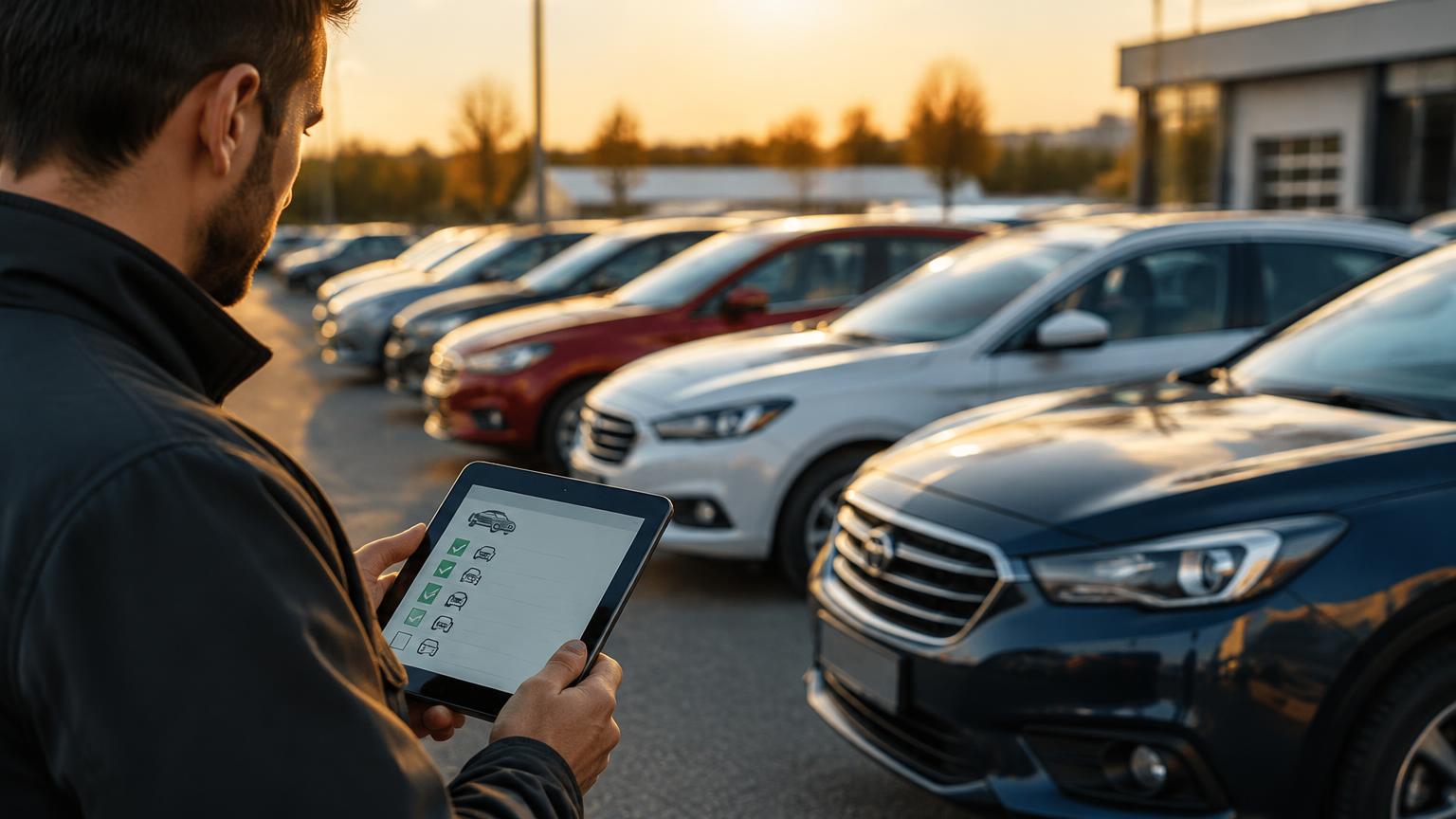
The short answer: Standardizing used car inspections with AI means every vehicle gets graded against the same model-enforced standard — the same damage, flagged the same way, with the same time-stamped photo evidence — no matter which store, which shift, or which person is running the lane. AI removes the variable that makes two identical cars get two different write-ups: human judgment under time pressure.
The problem isn't bad inspectors. It's variance.
Hand the same trade-in to five appraisers and you'll get five condition reports. One calls the rocker scuff "minor." One misses it. One grades the whole car a half-point lower because it's Friday and he's seen forty cars. None of them is wrong, exactly. They're just human, and human is inconsistent by design.
That variance is quiet, and it's costly. It shows up as inconsistent CPO grades, wholesale cars that book differently than they present, and the "was this damage here at pickup" argument that nobody can win because the record is a checkbox and a signature. When the standard lives in each inspector's head, you don't actually have a standard. You have an average.
What "standardized" really means
A standardized inspection has three properties, and all three are hard to hit by hand.
It's repeatable — the same car scanned twice, or scanned at two different stores, produces the same findings. It's objective — a dent is flagged because the model detects a dent, not because someone decided it was worth writing down. And it's evidenced — every finding carries a dated photo, so the report is a record, not an opinion.
Humans can do any one of these on a good day. Doing all three, on every car, across every shift, is where the manual walkaround falls apart. Not because people are careless. Because consistency at volume is a machine problem.
How AI enforces one standard
An AI inspection system captures the vehicle the same way every time and runs the same detection model over every image. The model doesn't get tired at car number fifty. It doesn't grade softer on a slow day or harder after a bad one. It applies one definition of "dent," one definition of "scratch," one threshold for "worth flagging" — and it applies them identically whether the car is in Dallas or Denver.
That's the shift. The standard moves out of forty appraisers' heads and into one model that every store shares. A regional used-car director stops reconciling five grading styles and starts reading one. CPO sign-off gets faster because the condition report means the same thing every time. And the time-stamped photo record settles the pickup-versus-delivery dispute before it starts — you don't argue, you pull the scan.
Think of it as a single ruler handed to every store, instead of each store whittling its own.
Where the standard pays off: CPO and wholesale
Two places feel the consistency fastest.
Certified pre-owned. CPO lives and dies on a defensible inspection. When every unit is graded against the same model and backed by photos, certification stops being a judgment call and starts being a record you can stand behind — with the customer, with the manufacturer, and in any later dispute.
Wholesale and auction grading. A car that books a 4 but shows up a 3.5 costs someone money and trust. Consistent, evidenced condition reports mean the grade travels with the car, so what the buyer expects is what rolls off the transporter. Fewer arbitration claims. Fewer surprises at the block.
Where LumaScanner fits
LumaScanner is Tractable's AI vehicle inspection system, and consistency is the point of it. It scans each vehicle as it passes through, applies the same damage-detection model to every unit, and produces a dated photo record of what it found. One standard, every car, every store — whether you run one rooftop or a group.
It's also built to actually get deployed across a group, which is where standardization usually dies. The footprint is small, the infrastructure light, the install measured in hours rather than weeks, and the pricing flat and single-tier — so rolling the same standard out to store number twenty costs what it cost at store number one. A standard only works if every location runs it, and that's a rollout problem as much as a technology one.
The downstream signal is real, too: LumaScanner customers have seen a 2.4x lift in repair approvals, because damage that's documented consistently and backed by a photo is damage that actually gets approved instead of argued over or missed.
The bottom line
Standardizing used car inspections isn't about replacing your people. It's about handing every one of them the same ruler. AI sets one objective, repeatable, photo-backed standard and applies it to every car — so a 4 means a 4, in every lane, on every shift. That's a standard. The clipboard was only ever an average.